Category: Articles

TKI-Kenya

Restoring Dignity to Karamajong Girls in Nairobi

In the sprawling Eastlands of Nairobi, Kenya, the harsh reality of Karamajong girls trapped in labour syndicates stands as a stark reminder of the exploitation facing vulnerable communities. These young girls, originally from Uganda, are subjected to long hours of labor, physical abuse, sexual exploitation, early pregnancies and degrading living conditions. Often denied access to education and basic rights, their experiences highlight the urgent need for meaningful intervention. Inspired by Pope Francis’ call for mercy and compassion, as a collective movement we began to restore hope—offering these girls education, training and the possibility of a new life rooted in dignity and self-worth.

The Karamajong Girls Empowerment Program, led by the Project of Women in Faith Fellowship, held its inaugural meeting at the AOSK Tumaini Center in January 2024. The session focused on motivation, empowerment, gender equality and practical strategies for rescuing and rehabilitating the girls. Participants examined the systemic challenges the girls face ranging from the denial of education to exploitation and violence. The dialogue also explored root causes such as poverty, forced marriages and peer pressure, which laid the groundwork for targeted interventions that address both their immediate needs and long-term change. Interventions were designed with flexibility in mind, responding to the unique goals and circumstances of each girl.

A major milestone in the program was the successful repatriation of ELEVEN Karamajong girls to Uganda, where they began vocational training at the St. Bakhita Institute, run by the Sisters. There, the girls gained practical skills in hairdressing and small business development, tools essential for economic independence. This emerged as a central pillar of the program, empowering the girls not only with knowledge but also with confidence and purpose. Additionaly, this Sister provided a source of spiritual encouragement, further nurturing their emotional and personal growth.
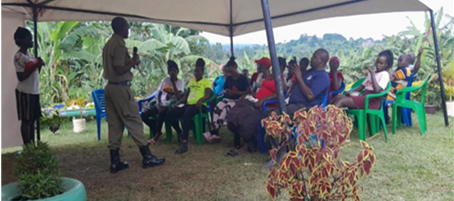
In February 2024, the initiative expanded with the launch of an Action Plan for The Remaining Karamajong Girls In Kamukunji. Working alongside children’s officers, the program explored ways to facilitate repatriation, family reunification and re-enrollment in schools or vocational training. Around 30 girls participated, voicing aspirations to pursue tertiary education and gain hands-on skills in fields such as computer basics, crafts and business management.

With its compassionate, community-driven and structured approach, the program showcases the power of collective action in driving transformation. By addressing universal barriers and equipping the girls with skills and support, the initiative lights a path toward self-reliance and resilience. More than just restoring dignity, it gives them a genuine chance to thrive.
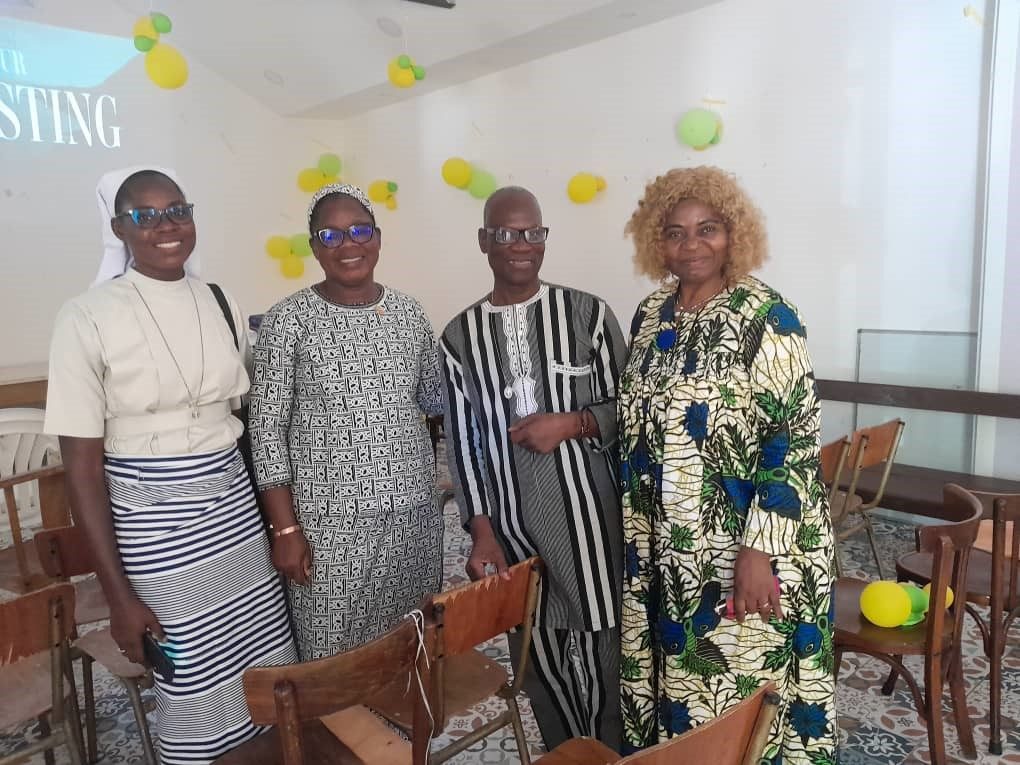
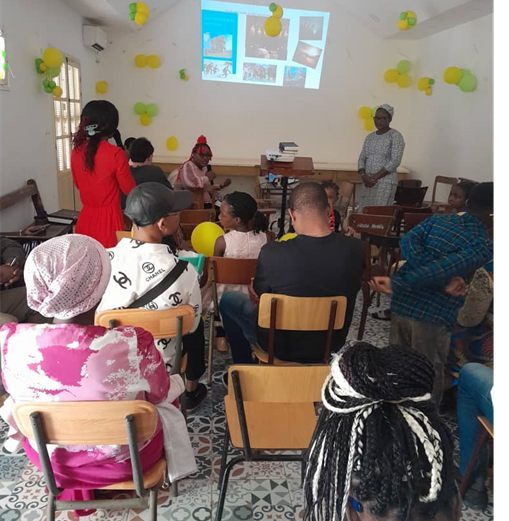
The success of the Karamajong Girls Empowerment Program highlights the critical role of partnerships among religious groups, government agencies and community organizations in dismantling exploitation and promoting justice. The repatriation and reintegration of the 11 girls mark a turning point in TKI-Kenya’s ongoing commitment to protecting vulnerable populations. As the program continues, it remains focused on nurturing a future where every girl has the freedom, resources and support to lead a life of dignity and purpose.
Talitha Kum North Africa

Talitha Kum North Africa: Walking with Hope and Humanity September – December 2024 Highlights

“God walks with His people.”
In North Africa, our mission is to serve the most vulnerable—our brothers and sisters facing exploitation and human trafficking often live out their lives quietly, in the smallest and simplest of ways. Following in the footsteps of Christ, we serve humbly, as a Church in the margins, close to those in need.
In Algeria, our awareness-raising efforts among religious congregations and local communities is beginning to bear fruit. More people are not only showing interest but taking real, meaningful steps to get involved. We believe in the power of quiet goodness, the kind that transforms lives without seeking recognition.


With that spirit, we organized two special moments for our migrant brothers and sisters, rooted in faith and community.
On September 27, we shared a reflective afternoon around the theme of the 110th World Day of Migrants and Refugees. It was a powerful time of listening, prayer and heartfelt sharing. We were reminded of the deep truth in Pope Francis’ message:

“Every migrant and refugee experiences God as a companion on the journey, a guide and an anchor of salvation. They trust in Him before they leave, and they turn to Him when in need.”

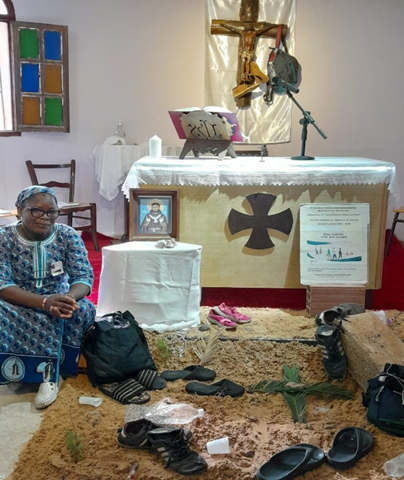
That moment of reflection prepared us for a second gathering on October 4—the Feast of Saint Francis of Assisi and the close of the Season of Creation. Together, as a Church, we lifted our voices in prayer for all people on the move. It was a celebration of faith and hope, calling us not only to pray but to act in harmony with all of Creation.
May the Lord open our eyes and hearts, so that every encounter with someone in need becomes a true encounter with Christ.     
— Sr. Franceline Hien, Missionary Sister of Our Lady of Africa, Algiers


Advent Reflections: A Step Toward the Light
On Friday, December 6, Sr. Franceline led a day of recollection for the parishioners of Saint Francis of Assisi Church in Bordj El Kiffan, inviting everyone to gain a deeper sense of Advent. With the theme “Entering into Advent”, the day was filled with prayer, reflection and moments of healing. Participants were gently guided into a space of reconciliation. As the day came to a close, many left with a renewed sense of peace, aware of the gentle goodness of a God who loves each and every one of us deeply.


A Christmas to Remember: Celebrating with Our Migrant Family
Having shared the journey of Advent together, it was only natural to welcome Christmas 2024 in the same spirit of unity and love. We gathered once more migrants, volunteers, parishioners and religious to celebrate the birth of Christ in an atmosphere of joy, discovery and connection.

Throughout Advent, we had been praying for our “invisible friends,” those often forgotten or unseen. On Christmas, those prayers came alive in a vibrant celebration, full of music, colour and faith.


Natalia.png

Silent Scars, Resilient Voices: Stories of Human Trafficking in Zambia

Silent Scars, Resilient Voices

Stories of Human Trafficking in Zambia

Human trafficking is a heinous crime that tears apart lives, leaving scars that may never fully heal. Yet amidst the horror, stories of survival emerge—stories of strength, courage and resilience. These voices remind us of the urgent need to fight this injustice. Below are the stories of three survivors who endured unimaginable hardship but refused to let their experiences define their futures.

Natalia’s Journey

A Childhood Stolen

Natalia Banda, a 21-year-old Malawian woman, was only ten when her life took a tragic turn. Orphaned at a young age, Natalia grew up under the care of her grandmother and uncles. Poverty was a constant shadow, and when a local man named Nyiramize offered her a job doing house chores, her grandmother agreed. As the small income she earned was meant to pay her school fees and support the family.

For two years, Natalia worked for Nyiramize, believing his promises of support. However, one day he suggested they travel to buy clothes for her and reassured her she’d return home that evening. Instead, he took her across the border into Zambia via a thick forest avoiding detection.

In Zambia, Natalia’s world unraveled. Forced to work as a domestic servant for Nyiramize and his brother, she endured years of sexual exploitation. Isolated from her family and trapped in a foreign country, she had no way to escape. At 18, she became pregnant, which enraged Nyiramize and led to further physical abuse.

In her desperation, Natalia sought refuge with a family from her church. Claiming she was an orphan, she convinced them to take her in. Despite finding temporary safety, her past caught up with her when she married a Zambian man. Nyiramize claimed she was his wife and sued her husband for marriage interference.

It was only when her husband travelled to Malawi and located Natalia’s family that the truth came to light. Her family revealed they had believed she was dead after losing contact for so many years. Although Nyiramize was eventually charged with child sexual abuse, the absence of strong anti-trafficking laws at the time meant he escaped prosecution for trafficking.

Though Natalia’s case was before he existence of the Anti-Human Trafficking Act of 2008, Nyiramize was eventually arrested and charged with child abuse and sexual exploitation. While justice was served in part, Natalia’s story Natalia’s story illustrates how trust and poverty can be exploited by traffickers.

Lishebo’s Escape

A Promise Betrayed

Lishebo, a talented 20-year-old hairdresser from Lukulu, Western Province, dreamed of a better life. Lishebo was known for her beauty and talent in hairdressing. Her skills made her popular among the villages boys who wanted her hand in marriage and her family had high hopes for her future. However, financial struggles meant she couldn’t continue her education beyond primary school.
When her aunt, a salon owner in Lusaka, visited the village in December 2012, she offered what seemed like a golden opportunity. She promised to employ Lishebo in her salon, pay her a monthly salary and enroll her in night school so she could finish her education. The family eagerly agreed, believing this was the chance of a lifetime for Lishebo.

Upon arriving in Lusaka, Lishebo was optimistic about her new life. The first few days at the salon were enjoyable and she began to dream of supporting her family back home. But her aunt’s true intentions soon emerged. She began pressuring Lishebo to entertain patrons at the bar she ran alongside the salon, hinting that mingling with the “right people” could improve her prospects at a better life. When Lishebo refused, her aunt turned abusive, denying her food and cutting off her education. With no access to money and no way to contact her family, Lishebo’s health began to deteriorate.

One evening, while serving drinks at the bar, her breakthrough came when a patron of the bar, who recognized her from her village, struck up a conversation with her, were she shared all that she had been going through. Upon hearing her story, he gave her enough money to return home and he thereafter, reported the case to the Zambia Police’s Victim Support Unit.

Lishebo’s experience highlights how traffickers often exploit family relationships and promises of opportunity to trap their victims.


Rosemary’s Ordeal

A Dream Shattered

For Rosemary, a 23-year-old from a border town in Zambia, the promise of a well-paying job in South Africa felt like a dream come true. Her childhood friend Chella offered her a position with an NGO, complete with a house and car and a monthly salary of $1,000. Encouraged by her mother, who even contributed to her travel costs, Rosemary set off with Chella, trusting him completely,believing it would benefit the family.

The journey began uneventfully, but at the Zimbabwean border, Chella avoided official checkpoints and led Rosemary across the river at an unguarded spot. Though puzzled, she didn’t question him, believing he knew the best way to reach South Africa.

By nightfall, they reached Bulawayo, Zimbabwe, where Chella’s true intentions became clear. He locked Rosemary in a room under the pretence that he went to look for something to eat and later returned with another man. Both men, drunk and laughing, subjected her to horrific sexual violence. Over the following weeks, Rosemary was repeatedly assaulted, starved and threatened. Her captors warned her that any attempt to escape would result in harm to her family.

Desperate, Rosemary realized her only chance of survival was to build trust with one of her captors. She slowly convinced him to allow her short, unmonitored walks. During one of these outings, she found a payphone and contacted her mother, who immediately alerted the police in Zambia.

Thanks to training provided by organizations like the International Organization for Migration (IOM), Zambian police recognized the case as human trafficking and coordinated with their Zimbabwean counterparts. Rosemary was rescued and her captors were arrested.

Today, Rosemary is back in Zambia, recovering with the help of counseling and support. Her bravery in escaping and seeking help highlights the importance of cross-border cooperation in fighting.

The stories of Natalia, Lishebo and Rosemary reveal how trafficking thrives on vulnerability and deception. They also serve as powerful reminders of the resilience of survivors and the critical need for intervention. By amplifying their voices, we can inspire action to prevent others from falling victim. Every story shared is a step closer to ending human trafficking and creating a world where everyone can live free from exploitation.